REEs are a group of 17 chemically similar metals which got their name because they typically occur at low concentrations (between 0.5 and 67 parts per million) within the Earth's crust.
Indispensable in modern technology – featuring in light-emitting diodes, mobile phones, electric motors, wind turbines, hard disks, cameras, magnets and low-energy lightbulbs, for example – the demand for REEs has increased steadily over the past few decades, and is predicted to rise further by 2030.
Due to their rarity and high demand, they have become very expensive. A kilogram of neodymium oxide, for instance, currently costs approximately £175, while the same amount of terbium oxide costs approximately £3,350.
China currently has a near-monopoly on the mining of REEs, although the discovery of promising new finds in Sweden was announced with great fanfare in January.
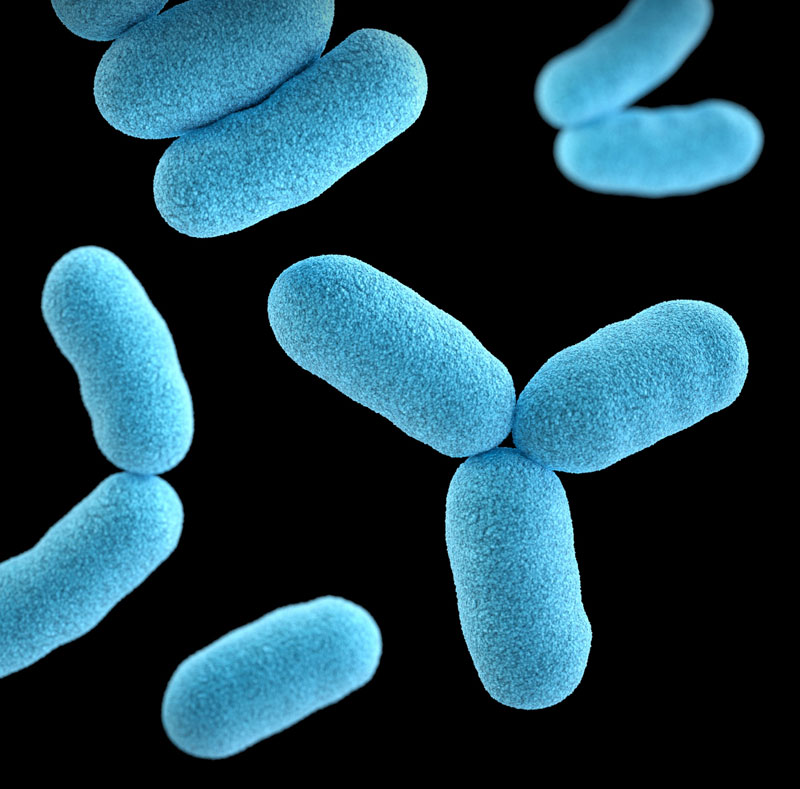
A group of German scientists from the Technical University of Munich has shown that certain types of photosynthetic cyanobacteria can efficiently absorb REEs from wastewater derived from mining, metallurgy or e-waste recycling.
The absorbed materials can afterwards be washed from the biomass and collected for reuse.
"Here we optimised the conditions of REE uptake by the cyanobacterial biomass, and characterised the most important chemical mechanisms for binding them. These cyanobacteria could be used in future eco-friendly processes for simultaneous REE recovery and treatment of industrial wastewater," said Dr Thomas Brück, an author on the study.
The team measured the potential for biosorption of lanthanum, cerium, neodymium and terbium by 12 strains of cyanobacteria in laboratory culture.
Most of these strains had never been assessed for their biotechnological potential before. They were sampled from highly specialised habitats such as arid soils in Namibian deserts, the surface of lichens around the world, natron lakes in Chad, crevices in rocks in South Africa, or polluted brooks in Switzerland.
The authors found that an uncharacterised new species of a bacteria known as Nostoc had the highest capacity for biosorption of ions of these four REEs.
Biosorption was found to depend strongly on acidity, it was highest at a pH of between five and six, and decreased steadily in more acid solutions. The process was most efficient when there was no 'competition' for the biosorption surface on the cyanobacteria biomass from positive ions of other, non-REE metals such as zinc, lead, nickel or aluminium.
The researchers used a technique called infrared spectroscopy to determine which functional chemical groups in the biomass were mostly responsible for biosorption of REEs.
They said the study showed that biosorption of REEs by cyanobacteria is possible even at low concentrations of the metals. The process is also fast; for example, most cerium in a solution was absorbed within five minutes of starting the reaction.
"The cyanobacteria described here can adsorb amounts of REEs corresponding to up to 10 per cent of their dry matter," Brück added.
"Biosorption thus presents an economically and ecologically optimised process for the circular recovery and reuse of rare earth metals from diluted industrial wastewater from the mining, electronic and chemical-catalyst producing sectors.
"This system is expected to become economically feasible in the near future, as the demand and market prices for REEs are likely to rise significantly in the coming years."
Source: https://eandt.theiet.org/content/articles/2023/02/bacteria-used-to-extract-rare-earth-elements-from-wastewater/



 English